Tristan Farnon
All Creatures Great and SmallTristan Farnon is Siegfried Farnon’s younger brother and a veterinary student who joins the household and practice with a mixture of cheek, restlessness, and practical involvement. He is not simply a comic foil: the episodes collected around him show someone learning the work amid repeated reversals, helping with its routine demands, and maintaining a ready faith that an awkward situation may improve. His relationship with Siegfried supplies much of the friction, while his friendship with James Herriot gives that friction a more companionable setting.
Identity and Introduction
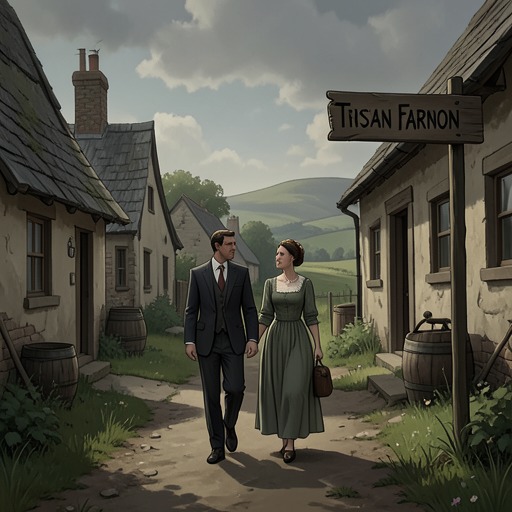
Siegfried introduces Tristan as his younger brother, a veterinary student at the Veterinary College in Edinburgh whose term has just ended. He asks James to collect him when he phones from the road, making Tristan’s arrival an errand entrusted to the newly established member of the practice. At the house, Tristan enters while Siegfried is speaking with James about a case, immediately placing him within both the family’s domestic life and its working world.
The brief account of his return also establishes the unevenness of his position. Tristan is still studying, yet he is expected to fit himself into the rhythms and arrangements of the practice. The evidence does not present his arrival as a formal change in status so much as an entry into an already busy household, where Siegfried’s authority and Tristan’s presence repeatedly have to be negotiated.
Learning Through Setbacks and Work
Tristan’s veterinary education is accompanied by a comic willingness to bend the truth. He describes Siegfried as someone who is always dismissing him and then forgetting that he has done so; he also recalls having to persuade his brother to accept an account involving parasitology. The episode gives a glimpse of a familiar pattern of quarrel and recovery, but it does not make Tristan’s account a reliable record of precisely what happened. Its value lies in the ease with which he treats a threatened dismissal as temporary and turns the story into a joke.
The poultry venture supplies a more concrete failure. The hens produce no eggs, and Siegfried grows increasingly irritated, inspecting the empty nesting boxes each morning and blaming the seller’s claims about their laying strain. Tristan’s next interest lies with the pigs. After the poultry disappointment, he spends time in the yard, sometimes feeding or mucking out and often leaning on the gate to watch them. The contrast matters: the failed venture does not end his participation in animal husbandry. Instead, his attention shifts to another set of animals, and his habitual presence in the yard becomes a quieter form of involvement.
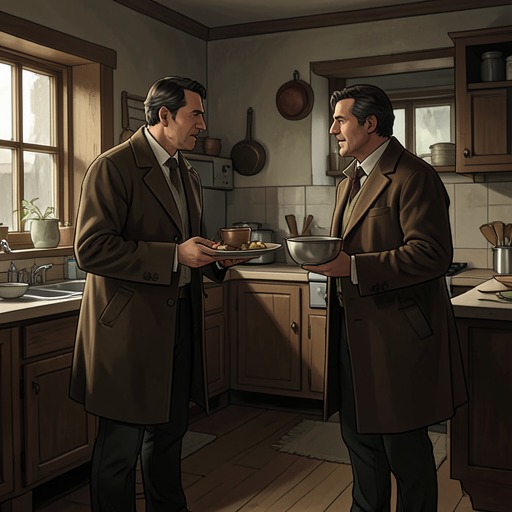
His participation in clinical work is practical rather than celebrated. During an operation on a dog, James closes the stomach wound while Tristan holds the anaesthetic mask over the patient. The scene presents him as part of the team, sharing a task that demands attention even as he sits moodily watching and drums his free fingers on the table. Elsewhere, he is responsible for unpacking bottles of Universal Cattle Medicine and stacking them in deep rows on the practice shelves. The medicine’s extravagant label promises relief for a long list of complaints and ends with an assurance that it never fails; Tristan’s work is the ordinary business of getting the stock put away, not endorsing the claim. Together, these scenes place him inside the daily practice without suggesting that his education or competence has reached a final stage.
Siegfried and the Household Strain
The relationship between the brothers combines authority, irritation, and an apparent habit of returning to familiar ground after conflict. Tristan is sent home by letter when someone is expected to stay the night. He objects that nobody has asked whether leaving is convenient or whether he has private arrangements, and regards the instruction as thoughtless. His protest makes a domestic order visible: Siegfried can assign his brother’s time, while Tristan is left to complain that his plans have not been considered.
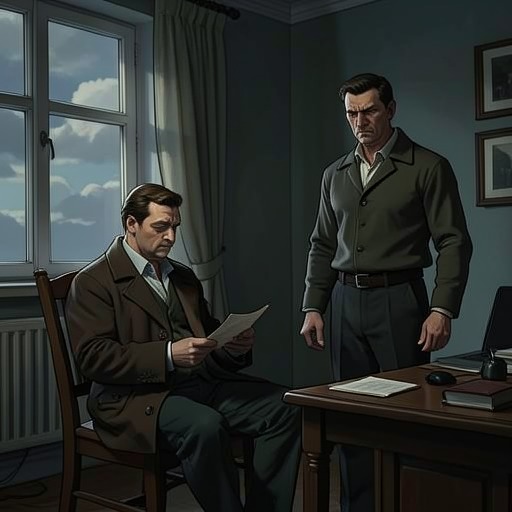
That tension can turn into a direct reprimand. On another occasion, James hears Siegfried challenge Tristan about where he had been the previous night and his return in the early hours after drinking. The scene records Siegfried’s forceful anger, but the other glimpse of their relationship is less severe: Tristan treats dismissal as something his brother habitually threatens and then forgets. The resulting portrait is neither of settled independence nor of permanent estrangement. Tristan continues to occupy a position under Siegfried’s authority, yet he answers that authority with complaint, humour, and the expectation that a quarrel will pass.
The brothers’ working relationship also assigns Tristan real responsibilities. When James is invited to spend a day away, the plan depends on Tristan holding the practice in his absence. This does not erase the household disputes, but it contrasts them with a practical trust: whatever his grievances or lapses, Tristan can be counted on to cover the work for a few hours.
James Herriot, Companionship, and Reversals
With James, Tristan’s familiarity takes the form of teasing, shared mishaps, and a readiness to help. While unpacking the medicine bottles, he asks whether James is taking his companion to the pictures. James explains that an earlier attempt at a date at the Reniston became a complete shambles, though he does not blame Tristan and acknowledges that Tristan meant well. James is now choosing a safer plan. The exchange shows Tristan close enough to James’s romantic anxieties to joke about them, while James’s response preserves the distinction between a misguided suggestion and ill intent.
Tristan’s own account of trouble is similarly mixed with comedy. Discussing the Hillman, he admits that he was not entirely blameless: he had taken a sharp turn in Dringley at sixty while distracted. He then casts himself as a victim of prejudice, a self-description that sits wryly beside his admission of reckless driving. On another journey, he is at the wheel as they leave a remote farm by crossing the fields from gate to gate; the farm has no road or track connecting it to the main road above the valley. These details make driving one of the settings in which his confidence and impulsiveness become visible, without making every journey a disaster.
A later opportunity to drive Siegfried’s Rover delights him precisely because he had never expected to get behind its wheel. Tristan treats the unexpected chance as evidence that events can turn out favourably. After another difficult situation, he returns to the same principle: things may turn out better than expected. This optimism is not presented as proof that his choices are wise or that every outcome is good. It is a way he frames reversals, maintaining comic momentum where embarrassment or frustration might otherwise have the final word.
Character and Narrative Role
Tristan’s portrait is built from changes of register. He can resent being ordered home, joke about Siegfried’s threats to sack him, fail with the hens, and then settle into watching the pigs. He can be restless during an operation and useful in carrying out its practical work; he can make light of a driving incident while admitting his share of responsibility. These contrasts make him more than a single comic type. The evidence does not resolve them into a formal transformation, but it repeatedly shows how his irreverence coexists with work and how his misadventures coexist with dependable assistance.
As Siegfried’s younger brother and James’s companion, Tristan links the practice’s professional routine to its domestic comedy. His presence gives the work a second generation still learning, improvising, and sometimes getting things wrong. The hens’ empty nests, the rows of medicine bottles, the dog’s operation, and the farm reached gate by gate all belong to different kinds of episode, yet together they show a life in which no one role defines him for long. His recurring confidence that circumstances may improve supplies a small counterweight to the frustrations around him: not a guarantee of success, but a characteristic refusal to treat a setback as the end of the story.